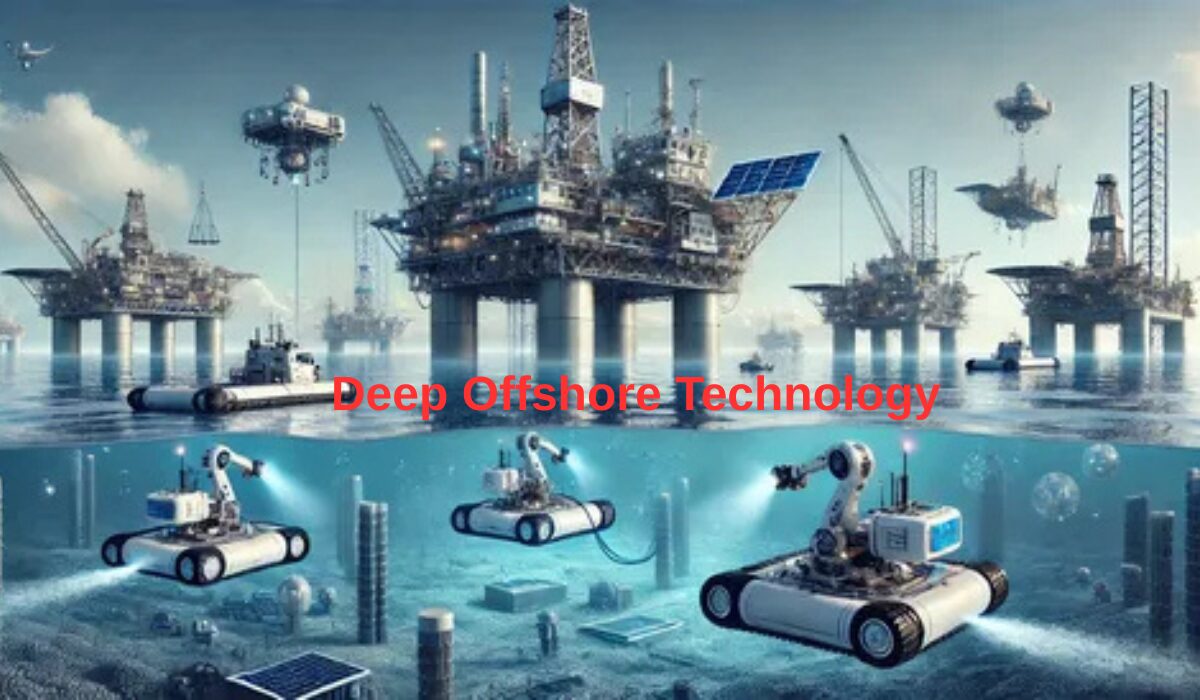
The world’s demand for energy continues to grow, but many easily accessible oil and gas reserves are becoming harder to find. This challenge has pushed engineers, scientists, and energy companies to look deeper beneath the ocean surface. That’s where deep offshore technology comes into play.
Most people hear the term and immediately think of offshore oil rigs. However, deep offshore technology is much more than drilling platforms floating in the middle of the ocean. It includes advanced robotics, subsea production systems, artificial intelligence, floating wind farms, digital monitoring systems, and engineering solutions capable of operating in some of the harshest environments on Earth.
In this guide, we’ll explore what deep offshore technology is, how it works, its key components, benefits, challenges, and why it remains one of the most important sectors in global energy production.
What Is Deep Offshore Technology?
Deep offshore technology refers to the specialized systems, equipment, and engineering methods used to explore, extract, monitor, and produce resources from ocean environments typically deeper than 500 meters (1,640 feet).
These technologies support activities such as:
- Offshore oil and gas production
- Floating wind energy projects
- Subsea infrastructure development
- Marine research and exploration
- Carbon capture and storage projects
Unlike shallow-water operations, deepwater projects face extreme pressures, freezing temperatures, strong ocean currents, and complex logistical challenges.
Key Takeaway
Deep offshore technology enables humans to safely operate in environments that were considered unreachable just a few decades ago.
Why Deep Offshore Technology Matters More Than Ever
As global energy consumption increases, many conventional reserves are becoming depleted. Deepwater regions contain some of the world’s largest untapped energy resources.
Major offshore regions include:
- Brazil’s Pre-Salt Basin
- Gulf of Mexico
- North Sea
- Guyana Basin
- West African Offshore Fields
These areas contain billions of barrels of recoverable oil and natural gas reserves.
Pro Tip
Many people assume deep offshore technology only supports fossil fuels. In reality, the same engineering principles are now being used for floating wind farms, tidal energy systems, and future offshore hydrogen projects.
A Brief History of Deep Offshore Exploration
The journey toward modern deepwater operations didn’t happen overnight.
Early Offshore Drilling
In the late 1800s, drilling platforms were built only a short distance from shore.
Expansion During the 20th Century
By the 1940s and 1950s, companies began drilling in waters exceeding 100 meters.
The Rise of Deepwater Platforms
The 1970s introduced semi-submersible rigs capable of operating in rough ocean conditions.
Modern Deepwater Operations
Today, advanced drilling systems can operate in water depths exceeding 3,000 meters, opening access to previously unreachable reserves.
The Core Components of Deep Offshore Technology
Deepwater operations rely on several interconnected systems.
1. Offshore Platforms
Offshore platforms serve as operational centers for drilling and production activities.
Fixed Platforms
These structures are attached directly to the seabed and are commonly used in relatively shallow waters.
Semi-Submersible Platforms
Semi-submersibles float on large pontoons beneath the water’s surface, offering excellent stability during rough weather.
Drillships
Drillships are highly mobile vessels equipped with advanced drilling systems capable of exploring ultra-deepwater regions.
Tension-Leg Platforms (TLPs)
TLPs are floating structures anchored by vertical tendons connected to the seabed. This design minimizes movement and improves operational stability.
Expert Insight
One of the biggest misconceptions about offshore platforms is that they simply “float.” In reality, engineers use sophisticated ballast systems, mooring technologies, and hydrodynamic calculations to maintain stability in challenging ocean conditions.
2. Floating Production Storage and Offloading Units (FPSOs)
FPSOs are among the most important innovations in deep offshore technology.
These massive vessels:
- Process oil and gas onboard
- Store produced oil
- Transfer resources to tankers
- Eliminate the need for extensive onshore infrastructure
Why FPSOs Matter
FPSOs allow companies to develop remote offshore fields that would otherwise be economically impractical.
3. Subsea Production Systems
Subsea systems form the backbone of modern offshore operations.
Key components include:
Subsea Trees
These control the flow of oil and gas from underwater wells.
Manifolds
Manifolds connect multiple wells to centralized processing systems.
Pipelines
Transport hydrocarbons from the seabed to processing facilities.
Umbilicals
Provide:
- Power
- Hydraulic control
- Communication capabilities
to subsea equipment.
4. Remotely Operated Vehicles (ROVs)
Human divers cannot safely operate at extreme depths.
This is where ROVs become essential.
These robotic systems perform:
- Equipment inspections
- Pipeline monitoring
- Maintenance tasks
- Repair operations
- Seabed surveys
Modern ROVs feature:
- High-definition cameras
- Sonar mapping systems
- Robotic manipulation arms
- Laser measurement tools
Real-World Example
If a pipeline develops a fault 2,000 meters below the surface, sending human divers would be impossible. Instead, operators deploy ROVs capable of performing detailed inspections and repairs remotely.
5. Autonomous Underwater Vehicles (AUVs)
Unlike ROVs, AUVs operate independently without continuous human control.
These advanced vehicles are used for:
- Seafloor mapping
- Geological surveys
- Environmental monitoring
- Infrastructure inspections
As artificial intelligence continues to improve, AUV capabilities are expanding rapidly.
How Deep Offshore Drilling Works
Many readers are surprised by the complexity of offshore drilling.
The process typically involves several stages.
Step 1: Seismic Surveys
Scientists use sound waves to create detailed maps of underground geological formations.
Step 2: Exploration Drilling
Exploratory wells confirm the presence of hydrocarbons.
Step 3: Development
Once reserves are confirmed:
- Additional wells are drilled
- Subsea infrastructure is installed
- Production facilities are deployed
Step 4: Production
Oil and gas are extracted and processed before being transported to markets.
Step 5: Decommissioning
When production ends, facilities are removed and environmental restoration efforts begin.
The Engineering Behind Stable Offshore Platforms
One question people often ask is:
How do these massive structures remain stable during storms and powerful ocean currents?
The answer lies in advanced engineering principles.
Ballast Systems
Water-filled ballast tanks adjust platform weight and balance.
Mooring Systems
Heavy-duty anchors and cables secure floating structures.
Hydrodynamic Design
Engineers carefully design hull shapes to reduce wave-induced movement.
Dynamic Positioning Systems
Computer-controlled thrusters automatically maintain vessel position without anchors.
Pro Tip
Many offshore innovations developed for platform stability are now being adapted for floating offshore wind farms.
Artificial Intelligence Is Changing Offshore Operations
Artificial intelligence has become a major driver of offshore efficiency.
AI-powered systems can:
- Predict equipment failures
- Optimize production rates
- Analyze operational data
- Improve safety monitoring
Rather than waiting for equipment to fail, operators can now identify issues before they become serious problems.
This predictive approach significantly reduces downtime and maintenance costs. Similar to how data-driven decision-making is transforming offshore engineering, modern businesses are also benefiting from strategic digital optimization approaches discussed in our guide on Becoming an SEO Strategist.
Digital Twins: The Future of Offshore Asset Management
One of the most exciting developments in deep offshore technology is the use of digital twins.
A digital twin is a virtual replica of a physical asset.
Engineers use digital twins to:
- Monitor performance
- Simulate operating conditions
- Predict failures
- Improve efficiency
Example
A digital twin of an FPSO can identify potential equipment issues weeks before they affect production.
This proactive approach improves reliability and reduces operational risk.
Deep Offshore Technology and Renewable Energy
Deep offshore technology is no longer limited to oil and gas production.
It now plays a crucial role in renewable energy development.
Floating Offshore Wind Farms
Traditional wind turbines require fixed foundations.
Floating wind platforms allow turbines to operate in deeper waters where wind resources are often stronger and more consistent.
Advantages
- Higher energy generation
- Greater site flexibility
- Reduced visual impact from shore
Many experts believe floating offshore wind will become one of the fastest-growing renewable energy sectors over the next decade.
Wave and Tidal Energy
Engineers are also exploring:
- Wave energy converters
- Tidal power systems
- Hybrid offshore energy projects
These technologies may eventually complement traditional offshore energy production.
The Benefits of Deep Offshore Technology
Deep offshore technology delivers several important advantages.
Access to Untapped Resources
Deepwater regions contain enormous reserves that support long-term energy security.
Economic Growth
Offshore projects create jobs across:
- Engineering
- Manufacturing
- Construction
- Logistics
- Maintenance
Technological Innovation
Many advances in:
- Robotics
- AI
- Materials science
- Automation
originate from offshore engineering challenges.
Energy Independence
Domestic offshore production helps reduce dependence on imported energy.
Challenges Facing Deep Offshore Operations
Despite its advantages, deep offshore technology faces significant obstacles.
Environmental Concerns
Potential risks include:
- Oil spills
- Habitat disruption
- Marine ecosystem impacts
The industry continues investing in safer and cleaner technologies.
High Costs
Deepwater projects require billions of dollars in investment.
Costs include:
- Exploration
- Drilling
- Infrastructure
- Maintenance
- Regulatory compliance
Extreme Conditions
Equipment must withstand:
- High pressure
- Corrosion
- Freezing temperatures
- Powerful ocean currents
These conditions demand advanced engineering solutions.
Carbon Capture and Storage (CCS): A Growing Opportunity
Many people focus only on oil production when discussing offshore technology.
However, a growing trend involves carbon capture and storage.
In CCS projects:
- Carbon dioxide is captured from industrial sources.
- CO₂ is transported offshore.
- It is injected into depleted reservoirs beneath the seabed.
This approach may help reduce greenhouse gas emissions while utilizing existing offshore infrastructure.
What Does the Future of Deep Offshore Technology Look Like?
The future appears highly promising.
Key trends include:
Increased Automation
Autonomous systems will handle more operational tasks.
Smarter Offshore Facilities
AI and digital twins will improve decision-making.
Renewable Energy Integration
Oil, gas, wind, and hydrogen systems may operate together through integrated offshore energy hubs.
Improved Sustainability
Stronger environmental protections and carbon-reduction technologies will continue shaping the industry.
Global Collaboration
Governments, researchers, and energy companies are increasingly working together to develop safer and more sustainable offshore solutions.
Conclusion
Deep offshore technology represents one of the most impressive achievements in modern engineering. From advanced drilling systems and subsea robotics to floating wind farms and digital twins, this sector continues to push the boundaries of what is possible beneath the ocean surface.
While challenges such as environmental protection, high costs, and technical complexity remain, ongoing innovation is making offshore operations safer, smarter, and more sustainable. As global energy needs evolve, deep offshore technology will continue to play a critical role in securing resources, supporting economic growth, and advancing renewable energy development.
Frequently Asked Questions (FAQs)
What is deep offshore technology?
Deep offshore technology refers to the equipment, systems, and engineering methods used to explore, extract, and manage resources in ocean waters typically deeper than 500 meters.
What industries use deep offshore technology?
The primary industries include oil and gas, offshore wind energy, marine research, subsea communications, and carbon capture and storage projects.
What is an FPSO?
An FPSO (Floating Production Storage and Offloading Unit) is a vessel that processes, stores, and transfers oil and gas directly at sea.
Why are ROVs important in deepwater operations?
ROVs allow operators to inspect, maintain, and repair underwater infrastructure in depths where human divers cannot safely work.
How does AI improve offshore operations?
AI helps predict equipment failures, optimize production, enhance safety monitoring, and reduce operational downtime.
What is the future of deep offshore technology?
Future developments include greater automation, AI-driven operations, floating renewable energy systems, digital twins, and expanded carbon capture and storage initiatives.