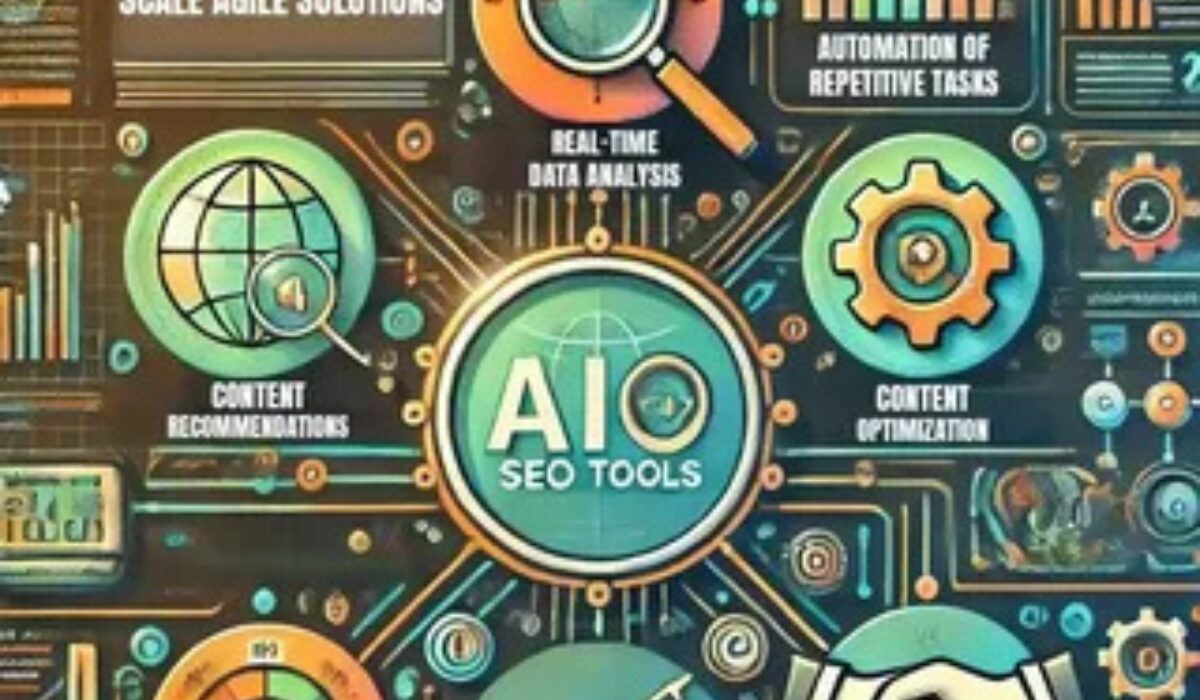
In today’s fast-evolving digital landscape, businesses are constantly struggling to keep up with changing search engine algorithms and increasing competition. This is where AI SEO tools scale agile solutions by transforming how companies approach digital growth. Instead of relying on slow and outdated processes, organizations can now leverage AI-powered systems to adapt quickly, make data-driven decisions, and stay ahead in competitive markets.
One of the biggest advantages of this approach is its ability to enhance every aspect of SEO and digital marketing. AI SEO tools streamline complex tasks, improve search rankings, and enable teams to scale their efforts efficiently. From content optimization to real-time performance tracking, these tools create a more connected and results-driven workflow, helping businesses achieve stronger visibility and higher engagement.
At its core, combining AI SEO tools with agile solutions allows businesses to operate with greater flexibility and precision. Companies can continuously improve their strategies, respond to market trends instantly, and maximize conversions through smarter optimization. As organizations embrace this approach, they unlock new opportunities for sustainable growth—making digital marketing faster, more efficient, and significantly more impactful.
Core Concepts
What Are AI SEO Tools?
From my experience, AI, SEO, and modern tools have changed how we approach search engine optimization. These advanced platforms use artificial intelligence and machine learning with smart algorithms to optimize and streamline daily efforts. Instead of relying on manual processes and traditional analytics, they bring automated solutions that help improve search rankings, content quality, and the overall SEO strategy. What really stands out is how data analysis can process massive amounts of data in seconds, uncovering hidden patterns and trends that guide better decision-making.
Smarter Features That Drive Results
When I started using these systems, I noticed how content optimization tools like Surfer SEO and Frase give real recommendations for keywords, headings, and readability, making search-optimized content easier to build. Strong keyword research now generates data-backed keyword suggestions, highlighting real opportunities based on user intent and search trends. At the same time, competitor analysis with Semrush and Ahrefs can analyze competitor websites, giving deep insights into backlinks, content strategies, and ranking performance.
Add real-time updates that quickly adapt to algorithm changes, and you get strategies that stay effective in dynamic SEO environments, supported by automation that can automate repetitive tasks like reporting, rank tracking, and site audits, ultimately freeing up time for strategic planning.
Popular Tools and Practical Use
In real-world use, I often rely on examples of popular and widely used AI SEO tools in the market. SE Ranking is a professional SEO toolset that tracks and enhances AI visibility across top answer engines, while also offering AI-powered content, keyword research, and competitor analysis. Surfer SEO improves on-page optimization with data-driven suggestions for better content structure, keywords, and user intent, while Semrush works as a comprehensive tool for backlink analysis and competitor tracking.
I’ve also used Frase for creating and optimizing content by analyzing top-performing competitors, and Jasper as an AI-driven writing assistant that generates SEO-optimized content at scale. Finally, MarketMuse delivers strong content optimization strategies by identifying gaps and opportunities in existing content, which makes scaling agile solutions much more practical. These efforts are best complemented with content marketing services to ensure a professional and structured approach.
What Does Agile Solution Mean in SEO?
From my experience, an agile solution in SEO is all about being flexible and fast while dealing with constant changes in search engines, Google, and algorithm updates. Instead of treating SEO as a static process, I’ve learned to rely on agile SEO, where you adapt quickly, track user behavior, and respond to industry trends in real time. This approach keeps SEO strategies effective in an evolving digital environment, especially when there are hundreds of updates every year and shifts happen rapidly.
Another way to look at it is through action. A strong agile setup uses rapid adaptation, data-driven decisions, and iterative improvements together. You constantly use real-time analytics, gather insights, and make data-backed decisions to refine your strategies. I personally focus on testing, learning, and refining SEO efforts so they stay aligned with current trends and user needs. This continuous loop makes it easier to handle ranking changes, improve content, and adjust keywords without wasting time.
When you combine this mindset with AI SEO tools, things scale much faster. These tools handle automating repetitive tasks like keyword research, technical audits, and content optimization, while also supporting real-time data analysis and predictive analytics using machine learning and historical data.
They help forecast future trends, improve content creation, fix technical SEO enhancements like crawl errors, broken links, and boost personalized user experiences. With constant performance monitoring, tracking CTR, bounce rates, and conversion rates, you can keep improving results and build truly flexible solutions with strong scalability.
Adapting Quickly to Trends
Focus on how AI tools allow businesses to adjust, react, and stay ahead with agile strategies. Emphasize continuous monitoring, real-time data, and decision-making.
H4: Automating SEO Tasks
Highlight how AI tools perform many tasks automatically, saving time, generating reports, identifying optimization opportunities, and enabling execution at scale.
Smart Recommendations and Insights
Show how AI provides data-driven recommendations, reducing guesswork, helping businesses implement improvements, adjustments, and enhancing workflow and efficiency.
Scaling Agile Solutions
Explain how AI tools help scale agile solutions, integrate into business intelligence, and improve SEO performance in digital marketing efforts. Include continuous updates and automation for maximum impact.
Strategic Importance
Why Do Enterprises Need AI-Driven SEO Within Agile Frameworks?
In my experience working with large organizations, one of the toughest challenges is not just achieving high search visibility but also maintaining it across multiple business units, brands, and regions. Traditional methods often fall short, which is why AI-based SEO platforms have become essential. They bring automation and predictive intelligence to tasks like keyword research, content clustering, link analysis, and user behavior modeling, allowing teams to focus on strategy rather than repetitive tasks.
When these platforms are embedded into Agile delivery pipelines, they provide valuable insights that accelerate iteration cycles. From my perspective, this is a game-changer for marketing, design, and development teams, who can now act on real-time intelligence instead of waiting for quarterly reports. The workflow becomes smoother, and decision-making is faster, which ultimately improves overall project outcomes and ROI.
The key advantage is that AI-driven SEO within Agile frameworks empowers teams to continuously optimize and adapt. By leveraging AI-based SEO platforms alongside structured Agile delivery pipelines, organizations can respond to market changes efficiently, keep their brands competitive across regions, and ensure that high search visibility is not just reached but consistently maintained.
The combination of automation, predictive intelligence, and actionable insights creates a sustainable approach to scaling SEO efforts across the enterprise. Readers can also learn more about becoming an SEO strategist to maximize results.
Selecting the Most Effective AI SEO Tools for Your Business
From my experience helping companies improve their online presence, it’s crucial to choose the right AI tools that match your business objectives. The market offers many AI tools, each with unique features and benefits. Some excel in keyword research, while others specialize in content optimization or technical SEO. Making the correct choice depends on your business’s unique needs and goals, ensuring that your SEO efforts are strategic and impactful.
Having a clear strategy in place is just as important as selecting the tools themselves. Simply implementing AI-powered tools without a solid plan can lead to wasted resources and missed opportunities. From my perspective, a well-thought-out strategy combined with the right tools helps businesses achieve significant improvements in SEO performance, making the investment worthwhile.
The integration of the right AI tools into your SEO workflow not only accelerates processes but also strengthens decision-making. By aligning AI-powered tools with a clear strategy, businesses can maximize the features and benefits of each tool, optimize content, enhance keyword research, and maintain technical SEO standards consistently, ensuring measurable growth and efficiency.
Scaling Agile SEO
Key Ways AI SEO Tools Scale Agile Solutions
AI-powered SEO tools deliver exceptional scalability and efficiency for agile SEO strategies, enabling faster, more flexible solutions. Here’s how they help drive these improvements:
Automating Repetitive SEO Tasks
From my experience helping businesses optimize their online presence, AI-powered SEO tools bring remarkable scalability and efficiency to agile SEO strategies. One major benefit is automating repetitive tasks, which are often time-consuming aspects of SEO. These AI tools automate functions like keyword research, identifying relevant keywords based on real-time trends and competition, as well as technical audits that check for crawl errors, broken links, and missing meta tags.
For content optimization, they assist by suggesting keyword placements and content improvements to achieve better ranking, allowing SEO teams to focus on higher-level strategies and enhance productivity and agility.
Real-Time Data Analysis for Agile Decisions
Another key advantage is real-time data analysis. AI tools can process vast amounts of information instantly, providing real-time insights that support agile decision-making. They monitor user behavior and search trends, enabling businesses to adapt quickly. By analyzing ranking changes and identifying necessary adjustments—whether updating content or refining keywords—teams can analyze large volumes of data and pivot swiftly to stay competitive in an ever-changing landscape.
Predictive Analytics and Scalable Content Creation
Beyond daily operations, predictive analytics helps forecast future trends using historical data and machine learning. These insights allow for proactive adjustments before algorithms or user behavior affect performance, helping businesses anticipate SEO trends, manage evolving keyword searches, and optimize content preferences to stay ahead of competitors and maintain rankings.
Additionally, content creation becomes simpler with tools like Jasper and Frase, which scale content creation by suggesting high-ranking keywords, meta tags, topic clusters, and optimized content. This approach accelerates content production, ensures tailored content for maximum search visibility, and enhances long-term SEO performance while technical SEO enhancements, personalized user experiences, and performance monitoring guarantee websites stay optimized, scalable, and continuously improved.
Expanding Agile SEO Across Global Markets
From my experience managing enterprise SEO projects, enterprises face additional layers of complexity when operating in multiple countries. Language localization, search intent variance, and compliance requirements can differ widely, making it challenging to maintain consistent SEO performance. AI SEO tools leverage machine learning to analyze these regional differences automatically, helping teams adapt strategies while respecting local nuances.
Through centralized governance, organizations can maintain brand integrity while enabling local teams to run independent Agile sprints that target country-specific opportunities. This balance ensures that each market receives tailored SEO attention without compromising global standards. In my experience, empowering local teams while keeping oversight centralized dramatically improves coordination and execution.
A scaled Agile SEO model promotes global coordination alongside local execution, ensuring speed in implementation without losing alignment. By integrating AI SEO tools and machine learning, enterprises can synchronize strategies across regions, adapt quickly to local conditions, and maintain both efficiency and agility. This approach ensures agile SEO solutions work seamlessly on a global scale, delivering consistent results while optimizing for each region’s unique needs.
Streamlining SEO with Continuous Delivery Pipelines
In my experience optimizing enterprise SEO workflows, DevOps pipelines have transformed software delivery by automating testing and deployment, and the same principles now benefit enterprise SEO. Using AI-driven automation tools, organizations can integrate SEO validation checks directly into CI/CD workflows, ensuring every code release adheres to technical SEO standards like page speed, schema markup, and mobile optimization. This approach helps teams maintain consistent SEO quality while reducing manual errors.
Real-Time Tracking and Automated Dashboards
Agile SEO teams rely on automated reporting dashboards to track ranking fluctuations, crawl errors, and backlink profiles in real time. From my perspective, having this visibility allows teams to respond immediately within each sprint cycle, adjusting strategies quickly without waiting for periodic reviews. The combination of AI-driven automation tools and CI/CD workflows creates a seamless, proactive SEO process that scales efficiently across complex projects.
Integrating Continuous Delivery into Agile SEO
By embedding continuous delivery principles into SEO pipelines, organizations can maintain speed and efficiency while ensuring compliance with technical SEO standards. This integration empowers Agile SEO teams to monitor real-time performance, track fluctuations, and act swiftly on crawl errors or backlink issues, making AI SEO tools scale agile solutions more robust and responsive. In practice, this approach bridges automation with strategic SEO management, ensuring scalable, high-quality results across all projects.
Predictive SEO and Data-Driven Sprint Planning
In my experience managing enterprise SEO projects, AI enables predictive analysis of keyword trends and competitor movements, helping enterprises model potential traffic growth scenarios and adjust sprint goals more strategically. Instead of simply reacting to algorithm changes, Agile teams can proactively adapt their backlog based on predictive signals, making planning much more efficient.
This data-driven approach minimizes wasted effort on low-value content while maximizing ROI through focused optimization. By identifying patterns in keyword trends and competitor movements, teams gain actionable insights that guide content strategy and resource allocation, ensuring each sprint delivers measurable results.
AI SEO forecasting tools provide early visibility into search opportunity gaps, allowing teams to plan and prioritize effectively. From my perspective, combining predictive analysis with data-driven sprint planning ensures that Agile SEO teams can anticipate changes, allocate resources intelligently, and continuously scale their efforts without losing alignment or efficiency, making AI SEO tools scale agile solutions highly impactful across multiple projects.
Integration & Collaboration
Integrating AI SEO Tools With Agile Project Management Software
In my experience managing enterprise SEO at scale, governance is crucial for large organizations, which often rely on platforms like Jira, Azure DevOps, or Monday.com to manage Agile workflows efficiently. AI SEO platforms can connect directly to these systems through APIs, making it possible to turn SEO recommendations into actionable backlog items that teams can implement during each sprint.
Each sprint can focus on specific SEO improvements, automated checks, and measurable KPIs, ensuring that teams have clear objectives and measurable outcomes. This level of integration guarantees transparency, traceability, and performance alignment across marketing, IT, and executive leadership, helping everyone stay on the same page and prioritize SEO tasks effectively.
By linking AI SEO platforms with Agile project management software, organizations can maintain oversight while accelerating execution. This seamless connection ensures that AI SEO tools scale agile solutions efficiently, enabling teams to respond to insights quickly, track progress accurately, and maintain alignment between strategic goals and daily SEO operations.
Enhancing Collaboration Between Marketing and Engineering
In my experience working with enterprise teams, enterprises often have marketing and engineering departments operating on separate timelines, which can slow down SEO initiatives. Using AI SEO tools combined with Agile ceremonies helps bridge this divide, ensuring that both teams stay connected and aligned throughout each project cycle.
During sprint reviews or retrospectives, teams can discuss technical performance alongside marketing outcomes, providing clarity and fostering collaboration. Shared dashboards improve visibility across departments, allowing insights to flow between teams and enabling quicker decision-making. This ensures that SEO strategies are implemented cohesively without misalignment or duplicated efforts.
The result is a unified approach where product releases and marketing campaigns align seamlessly, enhancing search visibility and customer engagement. By integrating AI SEO tools into this collaborative framework, Agile teams can work smarter, respond faster to data, and scale their SEO efforts efficiently, making AI SEO tools scale agile solutions both practical and impactful across complex projects.
The Role of AI in Scaling Agile Marketing Campaigns
From my experience working with enterprise teams, Agile marketing teams thrive on experimentation and iteration, and AI SEO tools support this approach by analyzing campaign data in real time and adjusting strategies automatically. This ensures that every marketing effort is informed by current insights rather than outdated assumptions.
AI can detect when content performance starts to plateau, enabling teams to take proactive steps by suggesting optimization tasks for upcoming sprints. This approach allows large enterprises to keep campaigns across multiple regions and channels synchronized, maintaining consistency while responding to shifts in local markets.
By adapting to local performance variations, teams can ensure that each campaign delivers maximum impact. Integrating AI SEO tools in this way allows Agile marketing teams to work smarter, make data-driven adjustments faster, and scale their campaigns efficiently, demonstrating how AI SEO tools scale agile solutions effectively across complex marketing operations.
Organizational Transformation
From Siloed SEO to Agile SEO Teams
In many organizations, traditional SEO functions are often hidden within marketing departments, disconnected from development and product delivery. From my experience working with agile teams, integrating SEO into cross-functional squads makes a huge difference. Agile enterprises allow SEO specialists to collaborate closely with product owners, UX designers, and content strategists during sprint planning, ensuring that technical and content SEO is built-in rather than patched later.
Modern AI tools like Surfer AI, Clearscope, and MarketMuse automatically recommend optimization paths, giving specialists more time to focus on strategy instead of manual auditing. In my projects, these tools have helped the team move faster and avoid repetitive work, making the whole process smoother and more measurable.
Adopting this approach transforms disconnected marketing efforts into cohesive agile SEO operations. When SEO specialists actively collaborate with content and UX teams, they can address both technical and creative challenges efficiently. Using AI tools strategically ensures every optimization path is informed, reducing guesswork and improving outcomes without relying solely on manual auditing.
Building Enterprise SEO Centers of Excellence (CoE)
In my experience helping companies grow, setting up SEO Centers of Excellence or CoE is a game-changer. These enterprises rely on AI-based research and Agile coaching to create a strong foundation for sustainable growth. By defining standards and managing enterprise-wide tooling, teams can maintain alignment with corporate objectives while ensuring consistent practices across local SEO squads. This approach turns tactical activity into a strategic asset, allowing organizations to promote collaboration and efficiency.
Part of building an effective CoE involves hands-on mentoring and fostering team collaboration. Mentor programs guide local SEO squads to adopt backlog refinement and sprint retrospectives, which reinforce Agile rituals. These practices help teams stay focused on goals, improve performance, and enhance coordination across enterprises, making the SEO efforts more scalable and impactful.
By combining governance, collaboration, and enterprise-wide tooling, a CoE can truly transform SEO operations. From my experience, manage, define, and promote are not just tasks—they become part of a culture that embeds AI-based research and Agile coaching into daily workflows. This ensures that enterprises achieve strategic assets that drive long-term sustainable growth while keeping SEO processes efficient and future-ready.
Governance and Compliance Considerations
From my experience working with large enterprises, ensuring SEO activities follow legal guidelines and ethical guidelines is critical. AI tools can automate compliance checks, covering accessibility, data privacy, and brand voice adherence. When applied within an Agile framework, these compliance validations happen continuously, helping teams reduce risk and avoid eliminating costly rework.
Effective Governance boards play a key role by monitoring real-time metrics, which demonstrate adherence to both corporate policy and regulatory requirements. Combining AI tools with strong Agile framework practices ensures enterprises can scale their SEO efforts while staying fully compliant. This structured approach supports sustainable growth from the CoE setup discussed earlier.
Integrating AI tools for governance not only simplifies oversight but also allows teams to automate tedious checks and focus on strategic SEO tasks. In practice, compliance validations, reducing risk, and following ethical guidelines create a reliable environment where enterprises confidently scale their SEO with real-time metrics and Governance boards guiding the process every step of the way.
Overcoming Organizational Resistance
In my experience, introducing AI SEO tools in Agile environments can face resistance from teams accustomed to traditional hierarchies. Leaders play a vital role by investing in change management and training to demonstrate value. Running workshops, pilot projects, and tracking success metrics helps build confidence and eases the transition, making the shift to Agile SEO smoother.
Creating a strong cultural mindset is essential for adoption. Encouraging experimentation, transparency, and continuous improvement fosters an environment where teams feel empowered. Executives can further support this by sponsoring initiatives and celebrating early wins, showing the benefits of the new approach in action.
When combined with previous strategies like building a CoE and ensuring governance and compliance, overcoming organizational resistance becomes part of a larger Agile framework. By focusing on training, mentorship, and measurable outcomes, enterprises can scale their SEO operations efficiently while maintaining a positive, collaborative culture.
Practical Implementation
How to Choose an Expert SEO Agency to Leverage AI Tools
When looking for the right SEO partner, it’s important to find an expert agency that truly understands AI, digital marketing, and how to leverage these tools to scale agile solutions. From my experience working with multiple clients, an experienced team can craft tailored SEO strategies that fit your business goals. Aron Web Solutions is known for providing web SEO services, including website design, that align perfectly with AI-powered SEO-driven campaigns, helping businesses tackle complex SEO challenges.
Another approach is to explore agencies like SEORaft, which specialize in comprehensive SEO solutions for niche markets and law firm SEO. They use the latest AI SEO tools to drive measurable results and ensure that clients get the best return on investment. Working with such specialists not only makes your SEO strategy more powerful, but also ensures a well-structured SEO strategy that works the right way for long-term growth.
Finally, the key is to choose an agency that can assist, help, and adapt strategies according to your needs. A specialized team that crafts solutions with precision, uses the right tools, and focuses on delivering consistent results will maximize your digital marketing potential. Clients who invest in AI-driven SEO with an expert agency often see a tangible difference in their online presence, proving that selecting the right SEO partner is more than just hiring services—it’s about forming a strategic relationship for sustained success.
Case Study
Case Example: Global Technology Firm Implementing AI SEO in SAFe
A multinational technology company using the Scaled Agile Framework (SAFe) faced challenges in maintaining consistent SEO across multiple product lines. By embedding AI-based SEO analytics into their Agile release trains, the product managers gained greater visibility into keyword clusters and customer journeys. From my experience, integrating AI in this way makes performance tracking and content recommendations much easier, allowing teams to adapt quickly to changes in digital marketing demands.
The developers worked closely with the product managers to implement SEO fixes directly within user stories, ensuring every update aligned with overall business objectives. This method automated many manual processes, making performance tracking more efficient and helping the team respond faster to Google algorithm updates. As a result, the company saw a 35% improvement in organic reach and a smoother workflow across their Agile processes.
Implementing AI in SEO within a Scaled Agile Framework proves how technology, automation, and analytics can work together to optimize results. The combination of AI-based insights, keyword clusters, and content recommendations allows teams to make smarter decisions, ensuring consistent SEO even across dozens of product lines. Having observed similar integrations, I can confidently say that embedding these solutions empowers product managers and developers to deliver measurable growth efficiently.
Future Perspective
The Future of Enterprise SEO in the AI and Agile Era
Looking ahead, enterprise SEO will continue to evolve as AI advances, moving toward autonomous optimization systems that can handle complex search algorithm changes automatically. In my experience, relying on models that simulate algorithm updates, test variations, and deploy winning configurations ensures that businesses stay competitive while minimizing manual errors. The combination of AI and Agile frameworks allows teams to innovate quickly without losing focus on key goals.
The Agile foundation remains crucial, providing human oversight, adaptability, and cross-functional collaboration as central elements of the strategy. By embedding these principles, enterprise SEO models can operate as an intelligent ecosystem, rather than just a collection of isolated tasks. From my perspective, this approach empowers teams to react to changes faster and make data-driven decisions that align with long-term growth.
Ultimately, enterprises that embrace AI in SEO and pair it with Agile methodologies will gain a significant edge. By continuously relying on autonomous optimization systems and leveraging models to simulate, test, and deploy strategies, companies can maintain consistent results and future-proof their enterprise SEO models. Observing this in practice, I’ve seen how integrating human oversight with smart AI solutions creates a dynamic and resilient digital marketing environment.
Conclusion:
Using AI, SEO, and tools effectively is essential for scaling agile solutions in modern businesses. From my experience, these tools allow companies to work more efficiently, make data-driven decisions, and adapt quickly to changes in the SEO landscape. AI technology is transforming how businesses approach SEO, giving those who embrace it a significant competitive edge and faster results.
For companies looking to leverage AI in their strategies, partnering with an experienced SEO agency is key. Agencies like Aron Web Solutions and SEORaft are top-tier, specialize in digital marketing, and use cutting-edge AI tools to help businesses succeed. Partnering with such experts helps unlock the full potential of AI, enabling teams to build a strong, scalable strategy that consistently delivers results. Readers can also explore Tech Business Enquiries’ homepage for comprehensive digital marketing services.
Whether improving local SEO, optimizing a website, or trying to rank higher for industry-specific keywords, AI-powered SEO tools take efforts to the next level. Companies can also enhance online performance by following a UX checklist that ensures speed, usability, mobile optimization, and conversions before going live. Observing happy customers and exponential development through agencies like Aron Web Solutions, it’s clear that trusted guidance can impact thousands of companies, helping them achieve digital success efficiently.